Breast Cancer Symptoms and Diagnosis
13:49
Sawyer M.D.
Posted in
Breast Cancer Symptoms and Diagnosis
Treatment Small Cell Lung Cancer
08:29
Sawyer M.D.
This study investigated whether chemotherapy with etoposide and cisplatin was superior to cyclophosphamide epirubicin and vincristine in small cell lung cancer. The CEV regimen was chosen instead of CAV because epirubicin was regarded as being less cardiotoxic than doxorubicin. THis study was conducted in Norway between 1989 and 1994 and recruited 440 consecutive patients from 25 hospitals. In total , 436 of these patients were eligible and were randomized to each arm. Patients were stratified according to the extent of disease.
Posted in
Treatment Small Cell Lung Cancer
High prevalence of foot problems
08:53
Sawyer M.D.
Posted in
High prevalence of foot problems
Quality Of Medical Resources In Low-Income Countries
05:16
Sawyer M.D.
In 1978 an international conference on Primary Health Care held in Alma Ata
what was then the USSR, and is now in Kazakhstan. The Declaration of Alma Ata resulting called
"Urgent action by all governments, all health workers and improvements, and worldwide
community to protect and advance the health of all people in the world "(World Health
Organization, 1978). While "action" has been interpreted as referring to a wide range of interventions
including drinking water, sanitation, nutrition and pest control, primary health care has also been
and noted, if caught a greater proportion of health budgets than purely
prevention services.
Since then, increased investment in the infrastructure of health care in many low-income
countries around the world means that urban and rural households have improved access to
health facilities and physicians. Although the availability of health care remains a problem in some
areas, such as some countries in SSA, a large majority of low income households in
countries, problems of access are no longer the primary concern that they were
1978.
Whether or not the gain of the health infrastructure has led to better health, it is clear that in
low-income countries today, access to health care facilities and staff often does not translate
health. Five case studies help to understand why.
medical providers in a 15 - minute walk from his house (and virtually every household in
his city). She chooses the private clinic run by Dr GH and his wife. Above the clinic a
prominent sign says "Mrs. MM, Gold Medalist, MBBS, suggesting that the clinic has a
very competent doctor (an MBBS degree is the basis for a doctor in the British.
4 hours to avoid long lines that form if people know it's there. We later discover that
a "free" his name to a number of different clinics.
Therefore, Ms. Sundar sees Dr. GH and his wife, three of them were trained
traditional Ayurvedic medicine with a course of six months to long distance. The doctor and his
woman sitting at a table surrounded on one side by a large number of bottles full of pills, and
the other, a bench with patients about them, which extends into the street. Ms. Sundar is at the end
this bench. Dr. GH and his wife are the most popular providers of medical care in
district with more than 200 patients each day. The doctor spends an average of 3.5
minutes with each patient demand 3.2 Questions and performs an average of 2.5 examinations.
After diagnosis, the doctor takes two or three different pills, crushed using a mortar
and pestle, and made little paper packets of powder that gives Ms. resulting
Sundar and asked him to take two or three days. These medications usually consider an antibiotic
and analgesic and anti-inflammatory. Dr. GH tells us that he constantly faces unrealistic
patient expectations, both because of the high volume of patients and their applications
treatments that even Dr. GH knows are not appropriate. Dr. GH and his wife looks like very
motivated to provide care to their patients, and even with a consultation room very tight, they
spend more time with their patients to a doctor in the public sector. However, they are not
bound by their knowledge of health care and instead providing health care, such as crushed pills
in a paper package, which will result in more patients willing to pay more for their services.
Indeed, overuse of drugs in India is a generalized (eg, Greenhalgh, 1987; Phadke,
1998). Note that this is consumer-focused and not "supplier-induced demand 'practitioners
exploitation of asymmetric information to people speak in unnecessary treatment.
Persons in low income countries can meet with a health care provider. In 2004, data
Demographic and Health Surveys show that 68 percent of urban and 58 percent of rural
Tanzania said they took their child to a health facility when he or she showed signs of
Acute respiratory infections (viral or bacterial colds and coughs). In India, for the same period, 78
percent of urban and 60 percent of rural residents reported having (National Family Health
Survey-3 data for 2005-06). In Indonesia, the overall rate is 62 percent, and in Paraguay in 1990
the rate was 53 percent. Although there is no precise comparison to U.S. data
National Medical Expenditure Survey (1988) show that 52 per cent of children being treated at a
health facility when they are sick with pharyngitis (throat infection) among the uninsured, the rate is
32 per cent. The comparability of these figures with data from the United States, in conjunction with the fact that
rural rates of use of health facilities are less than 80 percent of urban rates, suggests that most
Residents of low-income countries have access to health care when they need it.
Detailed investigations on the use of health care in low income countries often show many
contacts with providers of health care. People in rural Rajasthan, a low income and low-density
State of India - visit a physician six times a year (Banerjee, Deaton and Duflo, 2004).
Homocysteine levels and Heart disease
04:13
Sawyer M.D.
Homocysteine is a metabolite of methionine that may be remethlated by enzymes requiring folate cobalamin vitamin B12 to again from methionine or catabolized by the pyridoxine vitamin B6 dependent enzyme, cystathionine synthase CBS to form cysteine.
Posted in
Homocysteine levels and Heart disease
Alopecia
07:07
Sawyer M.D.
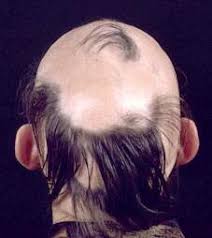
Alopecia areata
Baldness Treatments with Herbs and plant treatment
Posted in
Alopecia
Blood Vessels
05:37
Sawyer M.D.

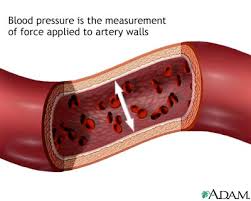
Cardiovascularsystem away from the heart to all parts of the body is carried by the blood of oxygen and nutrient delivery to all cells in the body play a vital role. without any obstruction to smooth flow of blood and organ tissue distribution of food, blood, development of an injured vessel is extremely important for the clotting process, but natural and necessary part of healing. Normally, as a result of illness or injury, bleeding is stopped by clot formation, blood coagulation results in about five minutes. blood clotting-that the body's cardiovascular system in the All-Merciful Lord-is made by, however, a solid mass of blood nonstop conversion as embedded, then the impossible life would be in the internal formation of blood clots vital organ blood flow obstacles. Out a normal blood vessels in the cardiovascular system, blood circulation is expected to be eroded as a result. However, blood in blood in the rapid transition of friction along the inner surface of blood vessels, as we smooth the flow of blood to regulate the cardiovascular system, with excellent results is not established. All vascular endothelial cells in the inner surface forming a thin layer play a significant role in preventing any damage which is created in this manner. Previously, a protective layer of endothelial cells were thought to be simple, now they have become much research interest. Blood vessels consist of two basic cells: smooth muscle cells and endothelial cells. Strength and tone of vascular muscle cells is responsible. Today, the role of the endothelial layer I know beyond a simple physical barrier. Moreover, the role of 25 different items of blood coagulation, cell proliferation, regulation of vascular permeability and the functioning of the immune system, the game will be released by endothelial cells. Endothelial cells, 10-15 microns and 20-25 microns wide and long. They have a single layer of cells in the inner vessel wall endothelial bulunur.bir adults around the body, the total is 5000-6000m2 and around 2.5 kg in weight. capillary endothelial cells during inflammation in the endothelial structure, one of them under a microscope, can be seen but their total length is approximately 96 000 km. Of the arteries that bring blood to the capillaries and can be transmitted through. In this phase, gas, liquid and feeder vessels and cells and tissues of oxygen and nutrients are supplied through the out. By contrast, their currents and other waste liquids, and for capillaries through both capillary taking place outside these material changes, endothelial cell layer permeability and capillary system pressure to compensate you for prepared. released during inflammation in heart failure and fluid pressure imbalance due to an increased amount of fluid intake is not sufficient to compensate for lost. swelling in the area in question, edema, rash, fever-like symptoms that arise in response to inflammation and pain is necessary to underline, a process that is not harmful. In contrast, our body's defense mechanism is a miracle; inflammation protects the body against serious injury. For example, inflammation, the body forms around a bee sting to prevent the spread of venom. Endothelial cells also has an important role in inflammation. Chemical molecules are secreted by endothelial cells in inflamed points by expanding the reaction vessel and thus cause increased perfusion. Then, the endothelial layer is ready to settle for leukocytes, which causes inflammation in the first place is a neutralizing substance.
Posted in
Blood Vessels